
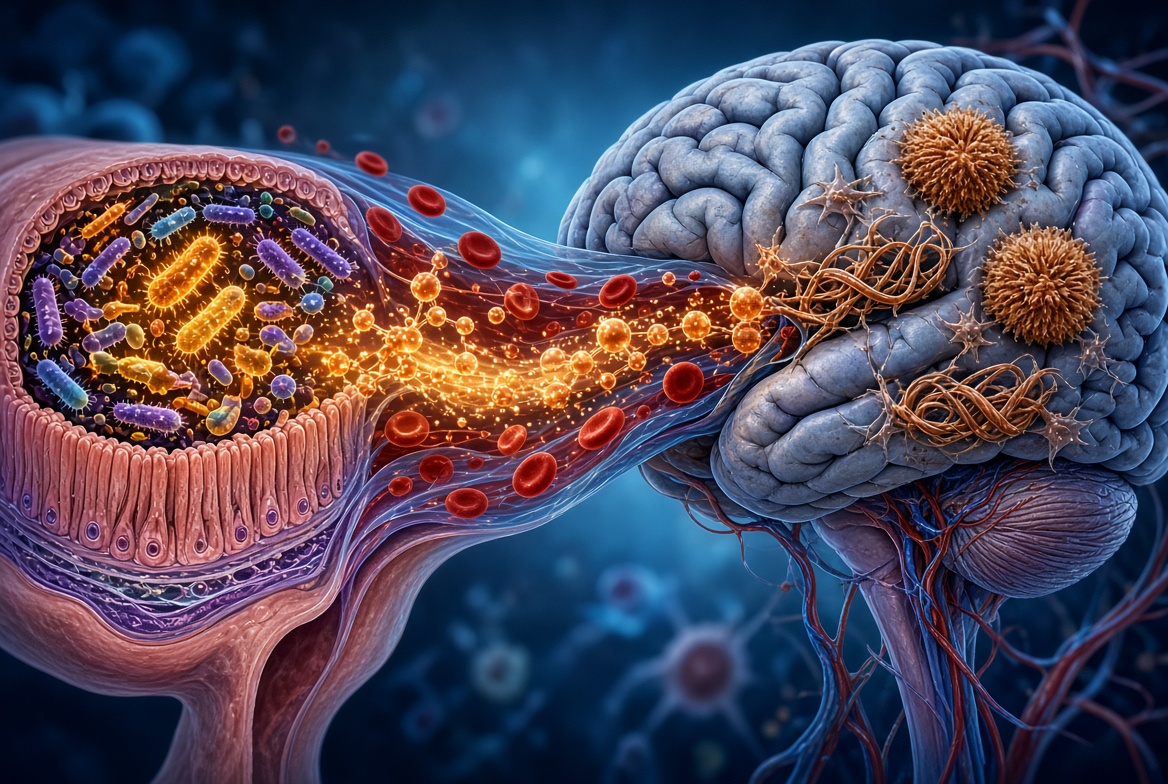

A common molecule from everyday gut bacteria tracks with faster brain decline and hallmark disease proteins.
For nearly a decade, scientists have known the gut microbes of people with Alzheimer’s differ from those of healthy adults. A new study pins part of that difference on one bacterial byproduct: imidazole propionate, or ImP. Higher levels of this compound in the blood appear tied to greater risk of the disease and quicker cognitive slide.
University of Wisconsin–Madison researchers, led by Barbara Bendlin and Federico Rey, published the findings in Nature Communications. They measured ImP in nearly 1,200 cognitively healthy adults from the Wisconsin Registry for Alzheimer’s Prevention and related studies. Those with the highest levels scored lower on cognitive tests. They also showed elevated blood markers of Alzheimer’s pathology, including pTau-217 and neurofilament light chain, a sign of neuron damage. Follow-up testing revealed faster cognitive decline among people carrying the most ImP.
From Gut to Brain
Certain gut bacteria convert the amino acid histidine into ImP. The molecule enters the bloodstream and can reach the brain. In mouse models of Alzheimer’s, chronic ImP exposure increased clumps of beta-amyloid and abnormal tau protein. It also weakened the blood-brain barrier, the protective lining that normally limits what enters the brain. In lab tests, ImP damaged human brain endothelial cells and promoted tau hyperphosphorylation in neurons.
A genetic variant present in about 43 percent of the study participants was linked to higher circulating ImP. Researchers suspect it may reduce the kidneys’ ability to clear the compound. The same variant has previously been associated with elevated Alzheimer’s risk in large genetic studies.
Why This Matters
ImP-producing bacteria are common but usually not abundant. Still, even low numbers can generate meaningful amounts of the metabolite. Diet influences production because histidine is widespread in protein-rich foods, yet simply cutting those foods is impractical—histidine is essential. Improving overall diet may help modestly, the team notes, but a more precise approach could target ImP itself.
Bendlin draws a parallel to cholesterol. “It could be just like cholesterol, where people with elevated cholesterol take a drug, a statin, that reduces their risk for heart disease,” she said. “If we can find an inhibitor that can help decrease the levels of ImP in the blood, that could hopefully reduce the risk of Alzheimer’s and the speed of cognitive decline for a significant number of people.”
The work does not claim ImP causes Alzheimer’s on its own. Age, genetics, vascular health, and other factors still dominate risk. Yet the compound offers a concrete, measurable link between the gut microbiome and brain changes that begin years before symptoms appear.
The study builds on earlier observations that microbiome differences exist in Alzheimer’s patients. By isolating one metabolite and testing it in both humans and animals, the team strengthens the case that gut chemistry can influence neurodegenerative disease. Future work will need to test whether lowering ImP actually slows pathology in people.
AI Disclosure: This article was created with the assistance of artificial intelligence tools and was reviewed and edited by the Glowls News editorial team before publication.