

Two portraits landed back among the olive trees. Two others are still gone.
At 5:48 a.m. on Tuesday, an alarm sounded inside Les Collettes, the hillside villa where Pierre-Auguste Renoir spent his last years and died in 1919. Five minutes later, municipal police were on the grounds in Cagnes-sur-Mer. The pair they missed had already cut a hole in the fence, walked through the garden, and lifted four canvases from their frames.

The villa is not a fortress. It is a house with shutters, a gravel drive, and the olive trees Renoir painted when his hands were too stiff for much else. The town turned it into the Musée Renoir in 1960. About a dozen of his paintings usually hang there, along with his easel, his wheelchair, and the furniture his family left behind.
What they took, and what they left
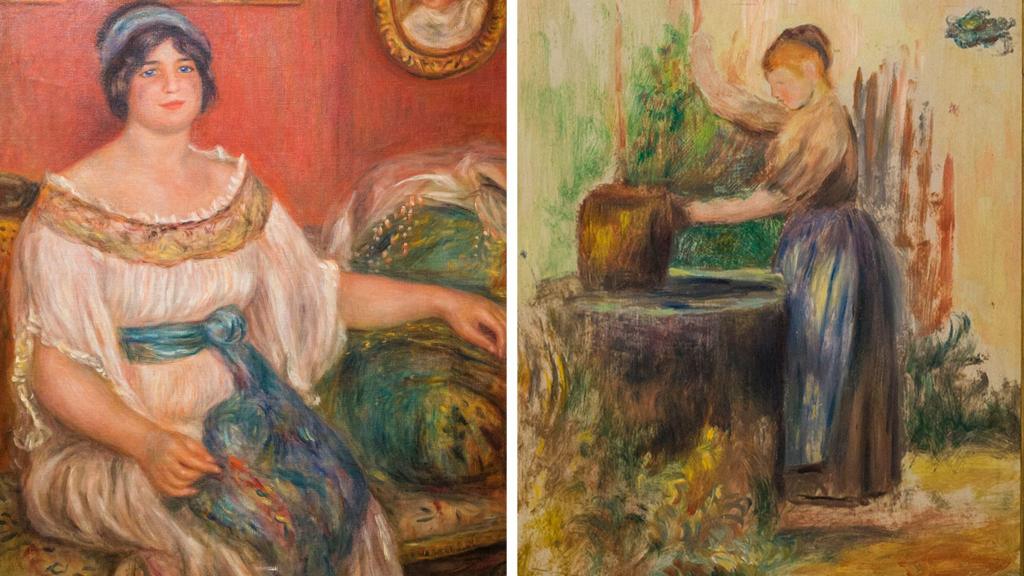
The two works still missing are Portrait of Madame Colonna Romano (1910) and Jeune fille au puits — Young Woman at the Well (1886).
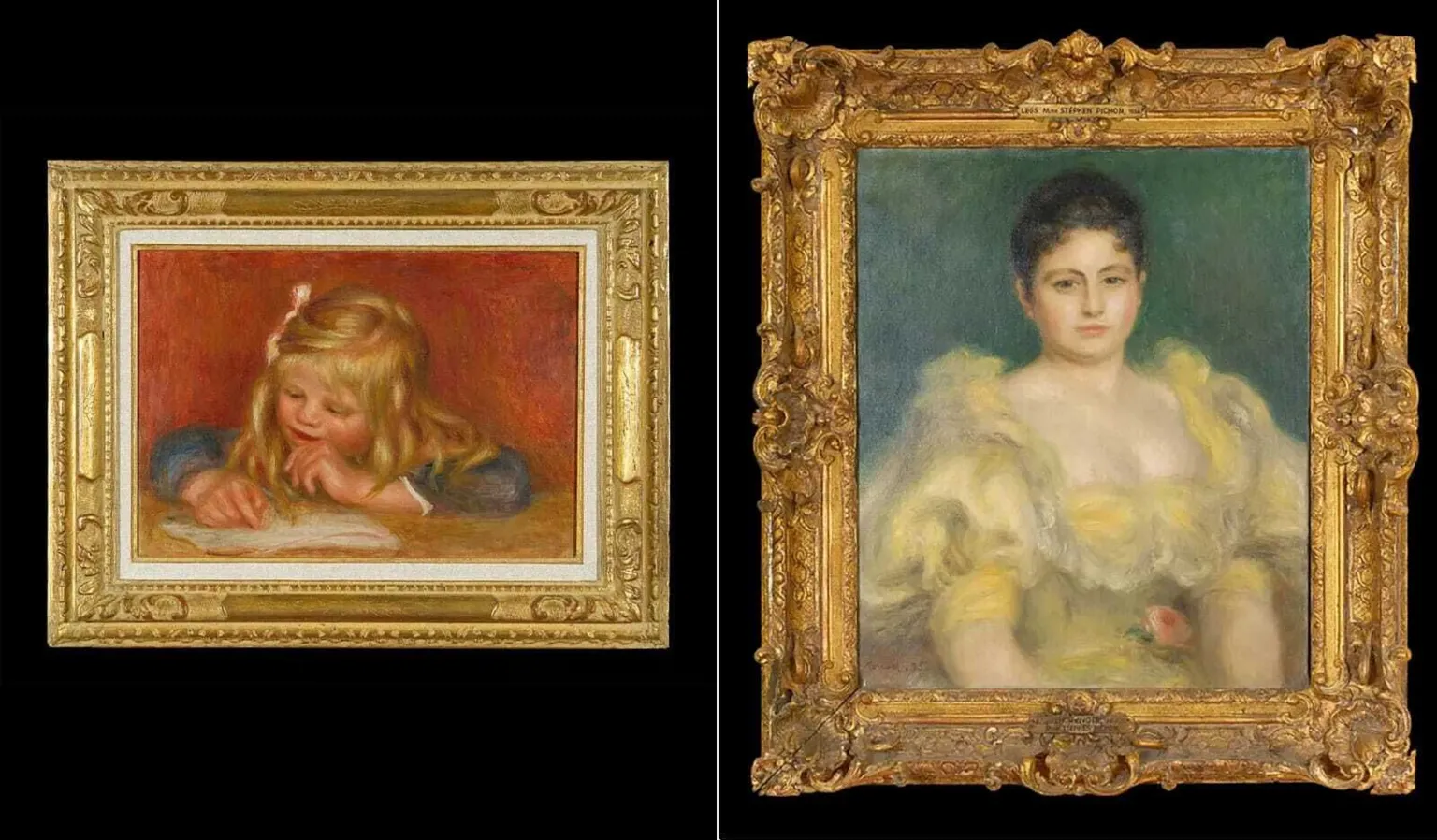
The two found in the garden were Portrait of Madame Pichon (1895) and Coco Lisant (1905), a small oil of Renoir’s youngest son, Claude, known as Coco, bent over a book with long blond hair. Claude later sold the house to the town. His father painted him more than ninety times. That canvas had already survived Nazi looting; Germany returned it to France in 1994. On Tuesday it spent a few hours on the grass.
Mayor Bryan Masson said the thieves wore helmets, gloves and combat gear and used an electric knife and a hacksaw on the fence and the frame fittings. CCTV caught them cutting the works free. Sirens made them run. They left zip bags in the garden with the two recovered pictures. Officials put the four works at about €9 million. Masson was blunter: “It’s Renoir’s. It is priceless. You cannot sell it like that.”
A house, not a vault
The raid is another blow to French museums after last year’s Louvre jewel theft. Europol has warned that cultural thefts in Europe are getting faster and more violent. This one lasted minutes. The thieves knew which room to hit.
Les Collettes was meant to feel lived-in. Visitors walk the same paths Renoir used when he could barely hold a brush. Stealing from that house is not only a crime against inventory. It is a theft from a family’s last rooms and a town’s most familiar hillside. Two paintings came home the same morning. The other two are still out there, somewhere a fence and a siren could not reach.
AI Disclosure: This article was created with the assistance of artificial intelligence tools and was reviewed and edited by the Glowls News editorial team before publication.