
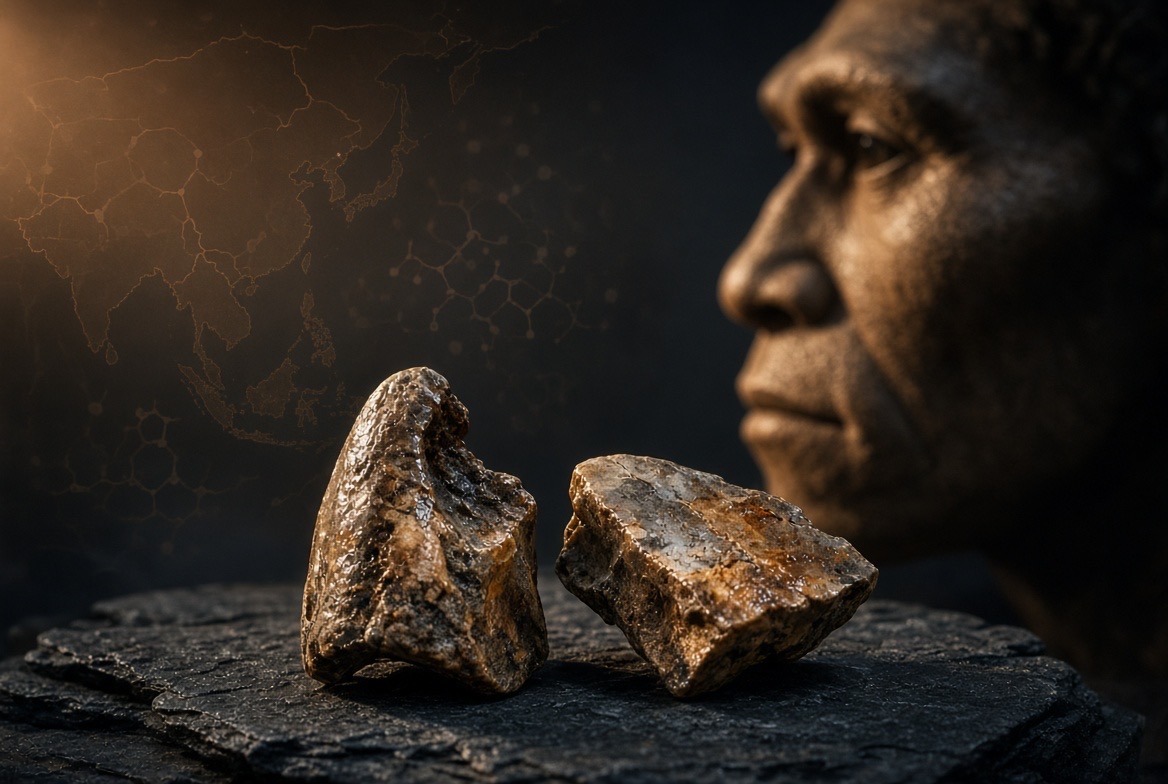

Proteins from 400,000-year-old enamel suggest East Asian Homo erectus mixed with Denisovans — and left a faint mark in people today.
DNA from Homo erectus almost never survives. Enamel does. That hardness just handed researchers their first molecular look at East Asia’s most famous early human — and a possible missing parent for the Denisovans.
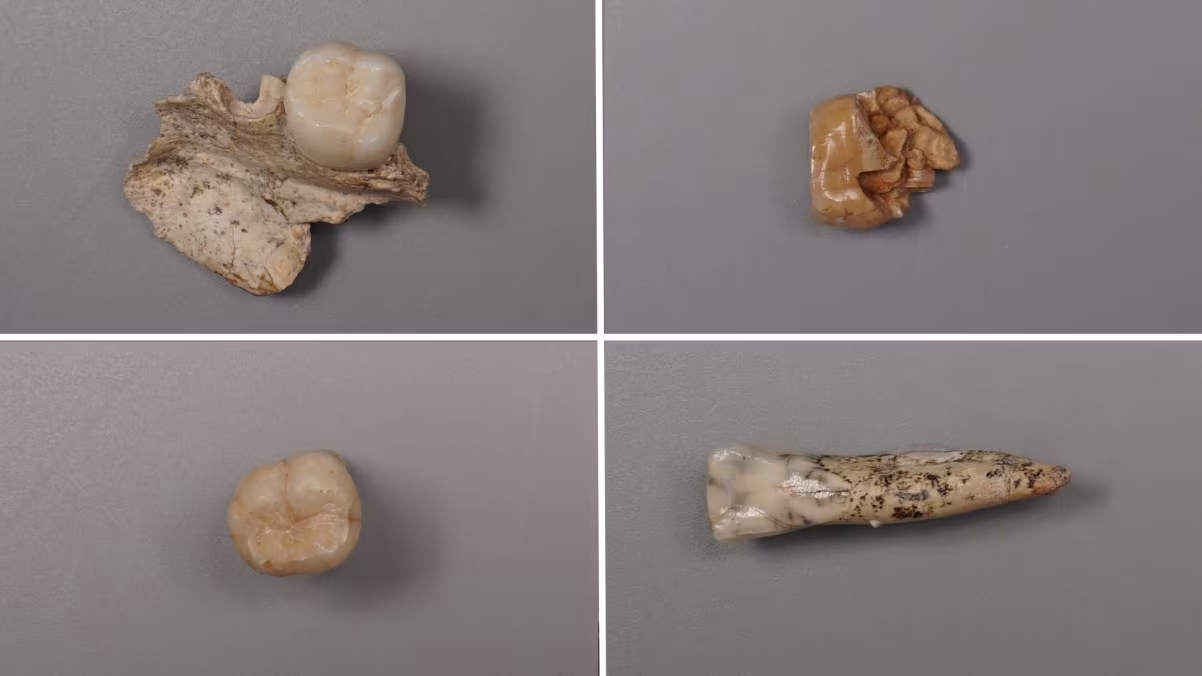
Six teeth from three Chinese sites — Zhoukoudian (Peking Man), Hexian, and Sunjiadong — date to about 400,000 years ago. A team led by Qiaomei Fu at the Institute of Vertebrate Paleontology and Paleoanthropology in Beijing etched microscopic samples and recovered enamel proteins. Five teeth came from males; one from a female. All six shared two amino-acid changes in ameloblastin, a protein that builds tooth enamel.
A unique marker — and a shared one
The first change, AMBN-A253G, has never been seen in Neanderthals, Denisovans, modern humans, Spanish Homo antecessor, or the older Georgian H. erectus from Dmanisi. Fu’s group treats it as a signature of this East Asian H. erectus population. The second, AMBN-M273V, was already known from Denisovan genomes and from some living people. It reaches about 21 percent frequency in the Philippines and much lower levels in India and Papua New Guinea — the same geography as Denisovan ancestry.
The authors’ reading is straightforward: East Asian H. erectus mixed with early Denisovans. The shared variant then rode Denisovan DNA into some modern populations. Geneticists had long flagged “super-archaic” chunks in Denisovan genomes with no known source. This study nominates H. erectus.
Why this matters
H. erectus left Africa nearly two million years ago and became the most widespread early human. Fossils are plentiful. Usable molecules were not. Paleoproteomics now gives those bones a genetic voice without destroying them. Smithsonian paleoanthropologist Ryan McRae, who was not on the paper, called it “a major step forward in tying together the broken branches of our human evolutionary tree.”
AI Disclosure: This article was created with the assistance of artificial intelligence tools and was reviewed and edited by the Glowls News editorial team before publication.