


Temasek and Seraphim lead a $100 million Series C as the Google-backed startup scales satellites, software, and factories.
Bengaluru’s Pixxel just locked in $100 million, the largest single funding round any Indian space-tech firm has raised. Singapore’s Temasek and London-listed Seraphim Space co-led the Series C. New money from 360 ONE Asset and South Korea’s IMM Investment joined existing backers Radical Ventures and growX Ventures. Total capital now stands at $195 million.
Google invested in Pixxel’s 2023 Series B. It did not join this round. That does not change the headline: a well-known U.S. tech investor already sits on the cap table of India’s most visible Earth-observation startup. No official valuation was disclosed. Indian reports have put the company in a $400–500 million range. Treat those figures as market talk, not a filed number.
Where the cash goes
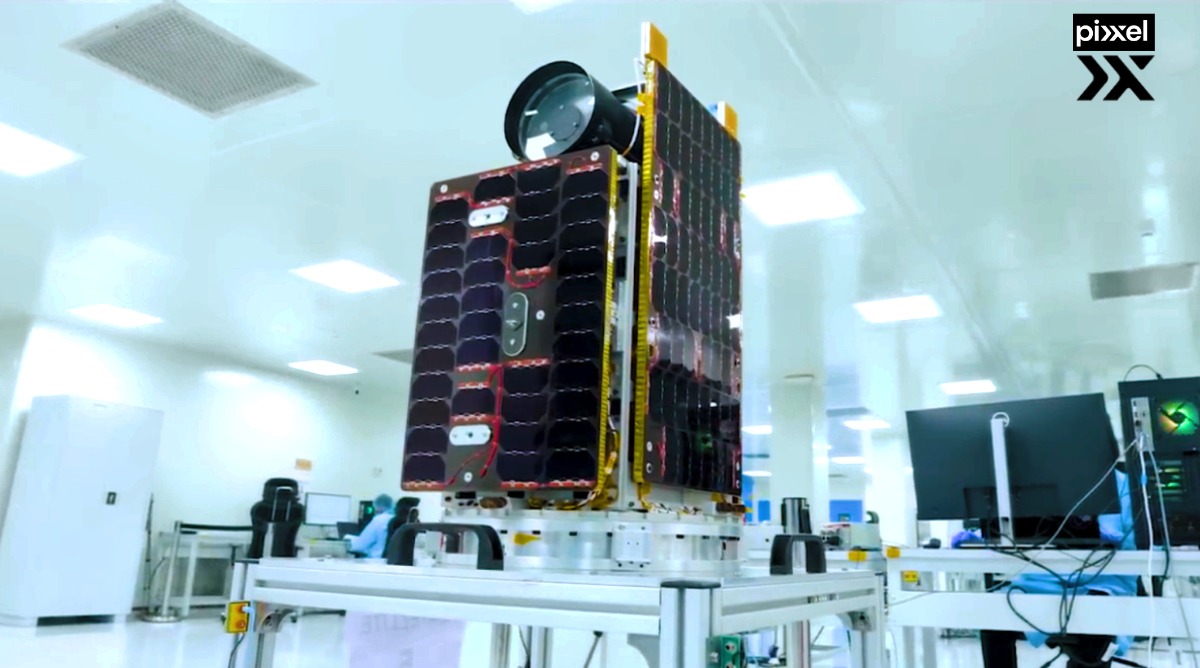
Pixxel started with hyperspectral satellites that slice reflected light into hundreds of narrow bands. Conventional cameras miss that chemical fingerprint. Six Firefly satellites now fly as what the company calls the highest-resolution commercial hyperspectral constellation, at about 5-metre resolution.
The new capital funds four bets. First, Honeybee, the next hyperspectral generation that adds shortwave infrared, with a first launch slated for 2027. Second, ultra-high-resolution optical satellites and later synthetic aperture radar that can see through cloud and night. Third, Aurora, the software layer that turns those feeds into decisions for farms, mines, insurers, and governments. Fourth, factories: Gigapixxel in India is meant to lift output from 25 to 100 satellites a year; the Los Angeles lab is to move from one or two birds at a time toward 10–15 a year.
The commercial case
Founder and CEO Awais Ahmed said the company set out to build “a health monitor for the planet.” The new round, he added, gives it “the scale to turn that vision into planetary infrastructure.” Seraphim CEO Mark Boggett pointed to three themes: AI-driven Earth observation, sovereign space systems, and India’s rise as a space-tech exporter.
The customer list already includes NASA and the U.S. National Reconnaissance Office. Pixxel has won multiple iDEX challenges from India’s defence ministry and was picked to lead a 12-satellite public-private Earth-observation constellation under IN-SPACe. That mix of civil data sales and government missions is the path from launch-heavy capex to recurring revenue. Ahmed has previously said the data business can carry 70–90% gross margins once the fleet is flying.
For India’s private space sector, opened to companies after 2020 reforms, the round is a signal. Launch startups grabbed early headlines. Pixxel is betting that the money follows the data.
AI Disclosure: This article was created with the assistance of artificial intelligence tools and was reviewed and edited by the Glowls News editorial team before publication.