
Exploratory talks cover an Ohio lease or a cloud-backed joint venture, as AI demand and Washington pressure collide with Seoul’s technology rules.
The world’s leading supplier of high-bandwidth memory is testing a step it has never taken: making memory wafers on American soil. According to people familiar with the discussions, SK Hynix is in early talks with Intel about producing memory chips in the United States, a move that would go beyond the packaging plant the Korean firm is already building in Indiana.
Two structures are on the table. One would have SK Hynix lease space inside Intel’s long-delayed Ohio One campus in New Albany. The other would create a joint venture that could pull in major cloud companies hungry to lock in memory supply. The talks are exploratory. No product mix has been disclosed. No term sheet has been signed.
SK Hynix moved quickly to contain the report. “SK hynix is exploring various options to strengthen its global competitiveness, but no specific plans or arrangements have been finalized at this time,” the company said. It added that nothing has been decided on the two scenarios named in the Reuters story, or on cooperation with any specific partner for U.S. memory production. Intel declined to comment on what it called speculation, while repeating that it is still investing to prepare the Ohio site.
Investors treated the rumor as real optionality. Intel shares jumped at the open. SK Hynix finished higher in Seoul. The market read the talks as a possible customer for Intel Foundry and a political hedge for SK Hynix. Both readings are plausible. Neither is a deal.
Why Ohio, and why now
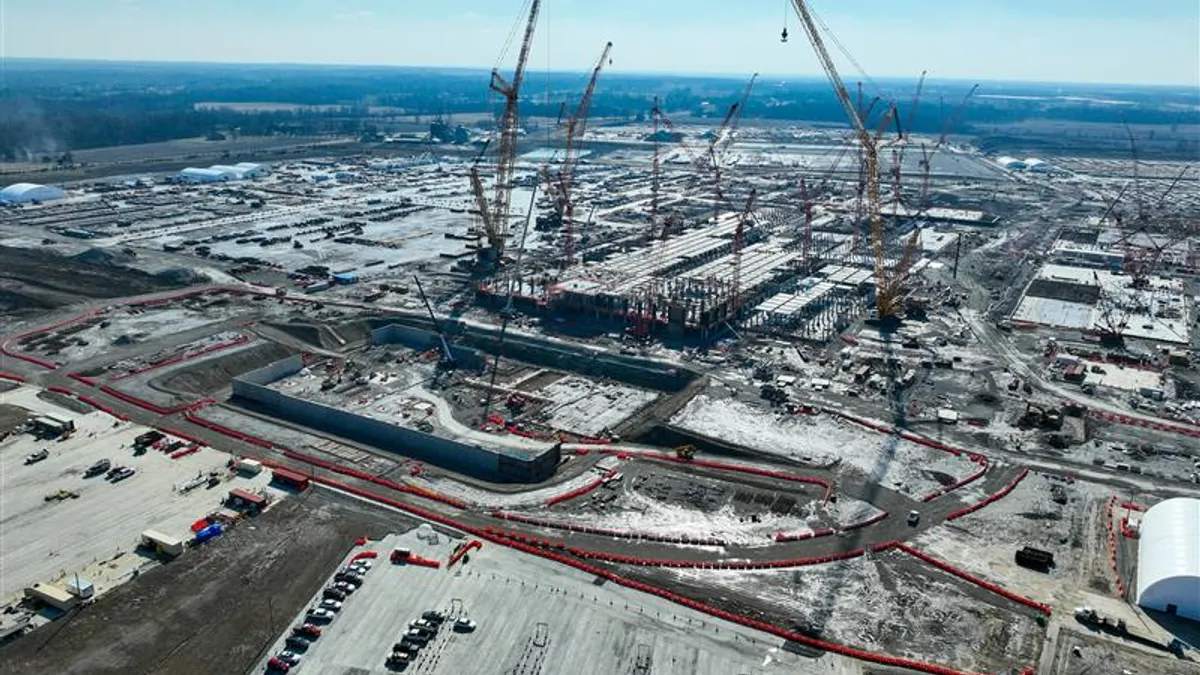
Intel announced Ohio in 2022 as a possible $100 billion campus. Production was first pitched for 2025. The first module is now aimed at completion around 2030, with operations in 2030–2031. The second module slips further. The site has already absorbed billions in construction spending and public incentives. What it still lacks is a clear roster of high-volume tenants.
A memory tenant would not turn Ohio into a near-term HBM factory. Front-end wafer lines take years to tool and qualify. But a lease or joint venture would put idle or underused cleanroom space to work and share the capital burden. For Intel, that is the point. For SK Hynix, Ohio would be its first U.S. front-end memory fab. Its only American project today is an advanced packaging and research campus in West Lafayette, Indiana, broken ground in late August, with mass production targeted for the second half of 2029 using DRAM wafers made in Korea.
Chairman Chey Tae-won said in July that customer and government pressure made a U.S. factory hard to avoid. “I think we need to build a factory in the United States. If possible, I believe we should build it,” he told reporters. Commerce Secretary Howard Lutnick has publicly pressed Korean and Taiwanese chipmakers to expand U.S. production and has floated steep tariffs if they do not. Cloud buyers, squeezed by the same memory shortage, have a direct interest in any structure that reserves wafers.
U.S. manufacturing is more expensive. Labor, construction, and a supply chain still concentrated in Asia all raise the bill versus Icheon or Yongin. SK Hynix knows that math. The company is still pouring capital into Korean capacity, including large expansions at Yongin Y2 and Cheongju M17. A U.S. wafer line would be a political and customer insurance policy, not a cost play.
Seoul can still say no
The hardest gate may not be in Columbus or Washington. South Korea’s trade ministry said any production decision is SK Hynix’s to make—unless the work involves a “national core technology.” In that case the Industrial Technology Protection Act requires a review. Sources told Reuters that advanced DRAM and HBM sit in that sensitive category. Transferring process know-how, tools, or recipes to a U.S. site, especially one shared with Intel or hyperscalers, would invite that review.
Seoul also wants Korean firms to accelerate a domestic chip cluster in the southwest. Using a U.S. investment as leverage in broader tariff and industrial talks with Washington is an option Korean officials have already floated. SK Hynix is being pulled in two directions: lock in U.S. customers and avoid tariffs, without hollowing out the technology base that made it the HBM leader.
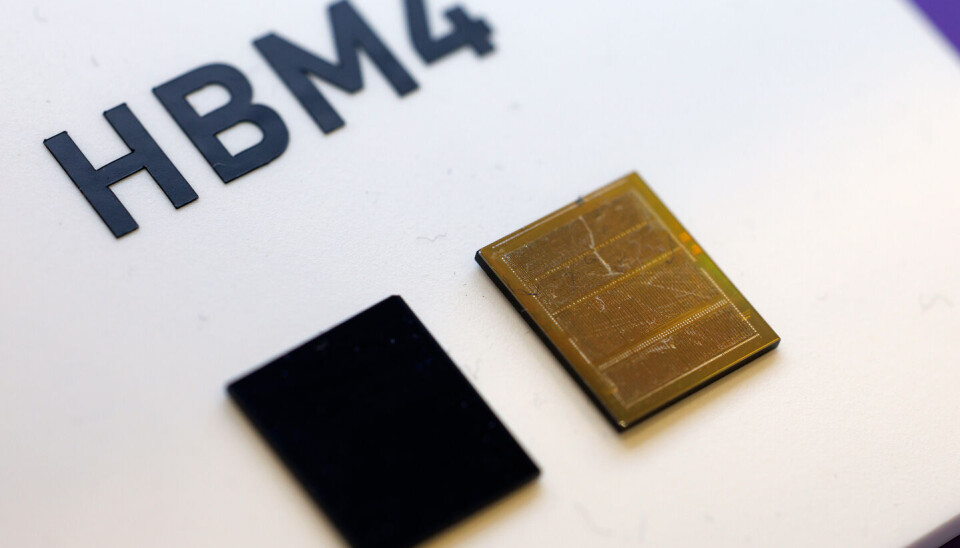
The product question is still open. SK Hynix makes server and mobile DRAM, NAND, and the HBM stacks that sit next to Nvidia and other AI accelerators. A U.S. line could start on more mature DRAM and leave leading HBM in Korea. It could also aim at HBM if customers demand a “made in America” stack. Reuters could not determine which path the talks favor. That ambiguity is the story. The political value of a U.S. wafer is highest if the chips are the ones AI buyers cannot get. The regulatory risk in Seoul is highest for the same chips.
What this is not
This is not a sale of Ohio. In July, Korean media reported that SK Hynix was reviewing a purchase of the campus. The company denied pursuing that deal. Wednesday’s report describes a lease or a multi-party venture, not a land grab. It is also not a substitute for Indiana. Packaging Korean wafers in the Midwest is already funded. Front-end production would be a different factory, a different workforce, and a different set of export-control questions.
Nor is it a quick fix for the memory crunch. Even a signed letter of intent would not add HBM or DDR5 wafers in 2027. Ohio’s calendar runs into the next decade. Indiana packaging starts later this decade. The shortage that is lifting SK Hynix’s profits and Intel’s foundry pitch will be decided first in Korean and Taiwanese fabs already running.
What the talks do show is how the AI buildout is rewriting industrial geography. Memory used to follow cost. It now follows power, customers, and governments that can tax or tariff the finished rack. Intel needs tenants. SK Hynix needs political cover and guaranteed offtake. Cloud firms need bits. Those three incentives can support a deal. They can also collapse if Seoul blocks the technology transfer or if Ohio’s timeline stays too slow to matter.
For now, the only firm text is the company’s own. Options are under review. Nothing is finalized. That is how chip geopolitics usually starts: a leak, a stock pop, and a carefully worded denial that leaves the door open.
AI Disclosure: This article was created with the assistance of artificial intelligence tools and was reviewed and edited by the Glowls News editorial team before publication.