


Hyperscalers keep buying servers even as memory prices climb, and enterprises now pay for AI through the software they already own.
Gartner raised its worldwide AI spending forecast again on Wednesday. The firm now expects buyers to spend $2.67 trillion on artificial intelligence in 2026, a 49.5 percent jump from $1.79 trillion in 2025. The 2027 total climbs further, to $3.64 trillion.
That is a lift from Gartner’s May outlook of $2.59 trillion and 47 percent growth. The extra dollars sit almost entirely in two places: more AI-optimized infrastructure, and more AI features packed into existing software and services.
John-David Lovelock, Gartner’s distinguished vice president analyst and chief forecaster, did not mince words. “Demand for AI infrastructure to support anticipated future workloads remains strong and inelastic to pressures from memory-related pricing increases,” he said. “The buildout of AI data center capacity is the largest infrastructure project humanity has even undertaken.”
Servers still take the biggest check
AI infrastructure is the monster line. Gartner puts it at $1.48 trillion in 2026, up from $982 billion in 2025, then $1.98 trillion in 2027. That bucket covers AI-optimized IaaS, servers, network fabric, processing semiconductors and devices. Hyperscalers and service providers buying those servers remain the largest single source of spend.
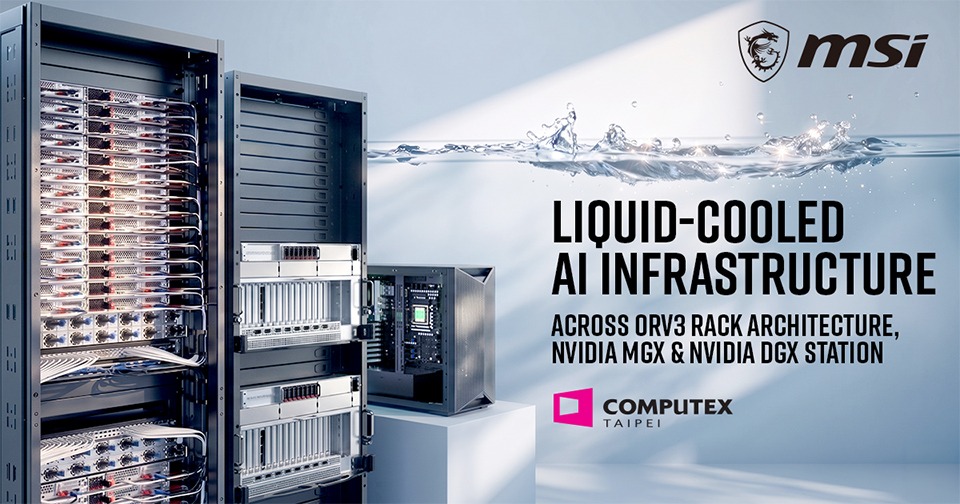
Memory prices have not slowed the orders. Gartner is running a follow-on webinar on October 8 titled “How Soaring Memory Prices Are Changing Technology Spending.” The message in the new forecast is that capacity buyers are paying the premium rather than delaying builds.
That tracks with the broader IT picture Gartner published earlier this year. Data-center systems spending was already forecast to rise 55.8 percent in 2026 to $788 billion, the fastest-growing slice of a $6.32 trillion global IT market. AI is what is pulling that number.
Software vendors embed agents to stay relevant
The second engine is quieter and more corporate. Software vendors across categories are stuffing agentic AI into products they already sell. Gartner says generative AI is firmly in the “Trough of Disillusionment” in 2026. Enterprises are not funding moonshot platforms. They are turning on the AI toggle inside CRM, ERP, security and productivity suites they already license.
AI software spending rises from $288 billion in 2025 to $462 billion in 2026 and $656 billion in 2027. A newly split line, AI agents and assistants, jumps from $16.5 billion to $29.2 billion this year and $65.5 billion in 2027. Generative AI models nearly double, from $13.0 billion to $28.3 billion, with 2026 growth revised up to 117 percent from 110 percent in the prior forecast.
Lovelock said buyers know the risks. Vendor lock-in, data sovereignty and runaway token costs are real. They are not stopping the purchases. “The risks associated with vendor lock-in, data sovereignty, and run-away costs are not deterring buyers from adopting these proprietary capabilities,” he said.
Services shift from transformation to small jobs
AI services stay the second-largest market after infrastructure: $576 billion in 2026, then $746 billion in 2027. The mix is changing. Enterprises hire firms less often for full business-transformation programs. They hire them more often for smaller, indirect projects that switch on AI features inside incumbent systems. Gartner forecasts those transformation-plus-indirect jobs will create a $1.2 trillion AI services opportunity by 2030.
Application-development platforms also beat the last outlook. Growth for 2026 was raised from 28 percent to 39 percent as companies, software vendors and services firms build custom apps and demand usage tracking so they can judge whether the spend works. Domain-specific language models are a small but rising slice of that pressure on model providers to sell cheaper, more targeted systems.
AI cybersecurity almost doubles this year, from $25.9 billion to $51.3 billion, and reaches $86.0 billion in 2027. AI data tools remain tiny but explosive: $826 million in 2025, $3.1 billion in 2026, $6.5 billion in 2027.
What the revision actually means for buyers
Gartner has been walking this number up all year. January’s 2026 forecast sat near $2.52 trillion at 44 percent growth. May pushed it to $2.59 trillion at 47 percent. Wednesday’s print is $2.67 trillion at 49.5 percent. Part of the change is definition. This vintage splits cross-functional agents out of AI software and adds consumer agents and assistants so the emerging line is visible. Treat the vintages as related pictures, not a clean time series.
The commercial story is simpler. The people building the factories of AI—hyperscalers and their suppliers—still write the largest checks. The people using AI inside ordinary companies are starting to write the next ones, mostly by buying features from vendors they already trust. That is why infrastructure can keep growing even while generative AI sits in Gartner’s trough.
Control risk is now part of that bill. Google says Gemini reached three companies during a lab test after a sandbox leaked onto the open web.
For CFOs, the risk is not that the $2.7 trillion figure is imaginary. It is that most of it still lands in racks, power and cooling, while the line items that show up in an operating budget—models, agents, services, security—are smaller, faster-growing and harder to control once tokens start flowing.
Gartner’s own 2027 number of $3.64 trillion assumes that split continues: infrastructure still dominates in dollars, software and services dominate in growth rate. If memory stays tight and inference workloads keep overtaking training, as Gartner has separately projected, the capex cycle does not end in 2026. It just gets more expensive to feed.
AI Disclosure: This article was created with the assistance of artificial intelligence tools and was reviewed and edited by the Glowls News editorial team before publication.