
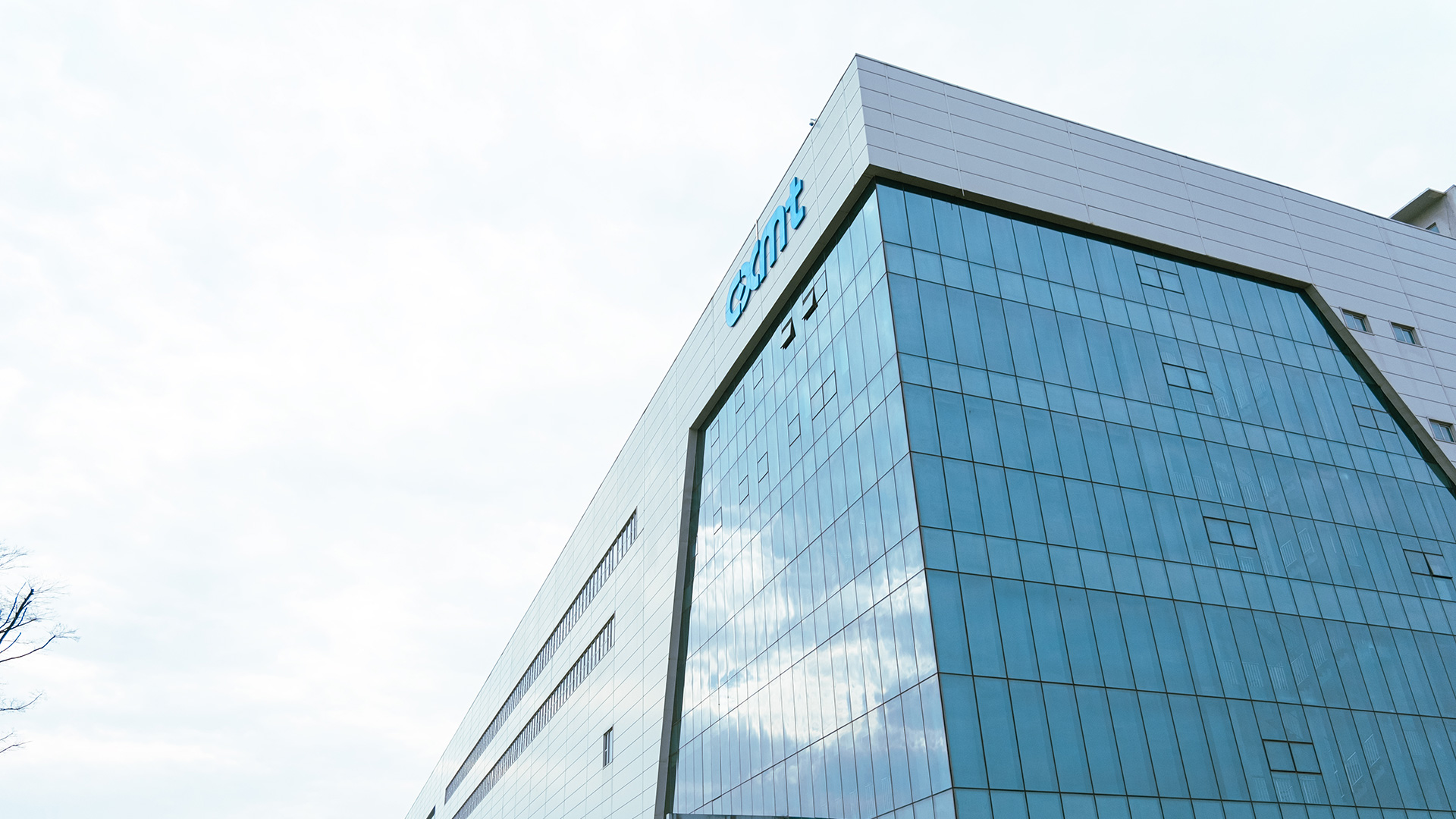

Domestic DRAM and NAND makers seize pricing clout and market share while global rivals race to feed data-center hunger.
China’s homegrown memory-chip champions are no longer just playing catch-up. In a market transformed by artificial-intelligence demand, ChangXin Memory Technologies (CXMT) and Yangtze Memory Technologies Corp (YMTC) have emerged as the “twin stars” of the sector—securing multi-billion-dollar contracts, raising prices, and forcing even domestic giants to adjust.
The shift became stark this month. CXMT, now the world’s fourth-largest DRAM producer, signed a five-year supply deal with ByteDance worth more than $7 billion. That followed a separate agreement with Tencent exceeding $3 billion. At the same time, the company has hiked prices on 64-gigabit DDR5 server modules above those of Samsung in some cases, according to people familiar with the transactions. When Huawei pushed back on the increases, CXMT went so far as to order Huawei-linked engineers from equipment partner SiCarrier out of its Hefei R&D cleanrooms.
The numbers underline the turnaround. CXMT posted $7.5 billion in first-quarter revenue—a 719 percent jump year-over-year—erasing a decade of losses in a matter of months. It is preparing to debut on Shanghai’s STAR Market after an $8.6 billion IPO. YMTC, focused on NAND flash, captured roughly 13 percent of the global market in the first quarter of 2026, with revenue more than doubling to exceed 20 billion yuan. Both firms are expanding capacity aggressively; CXMT aims to more than double output to over 600,000 wafers per month with new plants in Shanghai and Hefei, potentially overtaking Micron by 2030 if plans hold.
AI Demand Meets Policy Push
The catalyst is clear. Global AI data-center construction has turned ordinary memory into a scarce commodity. High-bandwidth memory (HBM) remains dominated by Samsung, SK Hynix, and Micron, but U.S. export restrictions on advanced HBM to China have opened a door for domestic alternatives. CXMT has begun producing earlier-generation HBM and is targeting HBM3 this year, even if its technology still trails leaders by roughly two generations.
Beijing’s self-reliance campaign has amplified the effect. State-owned buyers face limits on foreign memory purchases, and Chinese authorities have urged CXMT and YMTC to prioritize domestic customers. The result is pricing power that would have been unthinkable a few years ago, when both companies relied heavily on government subsidies and operated at a loss.
Limits and Geopolitical Friction
The gains are real, yet constraints remain. Neither firm has access to ASML’s extreme-ultraviolet lithography tools, the industry standard for cutting-edge production. They rely on older deep-ultraviolet systems and domestic process innovations. YMTC has replaced about half its equipment with Chinese alternatives since landing on the U.S. Entity List in 2022. Both companies have been designated Chinese military companies by the Pentagon, a label they reject, and further U.S. restrictions on equipment sales are under discussion in Washington.
Micron has acknowledged the Chinese firms’ growing capability and market share, while noting that most of their output still stays inside China. Analysts warn that rapid capacity expansion could eventually pressure the current “super-cycle” pricing environment, possibly as early as 2027–2028.
What Comes Next
For Chinese tech companies building AI infrastructure, the rise of CXMT and YMTC offers a practical alternative to constrained foreign supply. For global memory makers, it means a permanent new competitor that can undercut or match prices while serving a protected domestic market. And for policymakers, it underscores how export controls intended to slow China’s advance have instead accelerated the creation of viable domestic champions.
The twin stars are no longer waiting for the next cycle. They are shaping it.