


A new heatwave threatens to worsen blazes that have already emptied towns across France and Spain.
Thick smoke hangs over the Atlantic coast near Bordeaux. Flames have driven more than 300,000 people from their homes in France and Spain in one of the largest peacetime evacuations Europe has seen in years. Firefighters still battle out-of-control blazes while forecasts warn of another intense heatwave this week.
France’s Gironde Inferno
The worst fires have hit the Gironde region in southwest France. A blaze that began around July 22 has burned tens of thousands of hectares near Cap Ferret and the pine forests outside Bordeaux. Authorities evacuated about 220,000 people from coastal towns and inland villages. Some left by boat in the night. Homes were destroyed. Ash fell on nearby towns as smoke blanketed beaches and vineyards.
French officials described the fires as the worst since World War II. Interior Minister Laurent Nunez said the situation was unprecedented. President Emmanuel Macron ordered military support and held crisis meetings as flames came within 15 kilometres of Bordeaux’s outskirts. Firefighters contained parts of the fire overnight, yet the risk remains high.


Spain Declares National Emergency
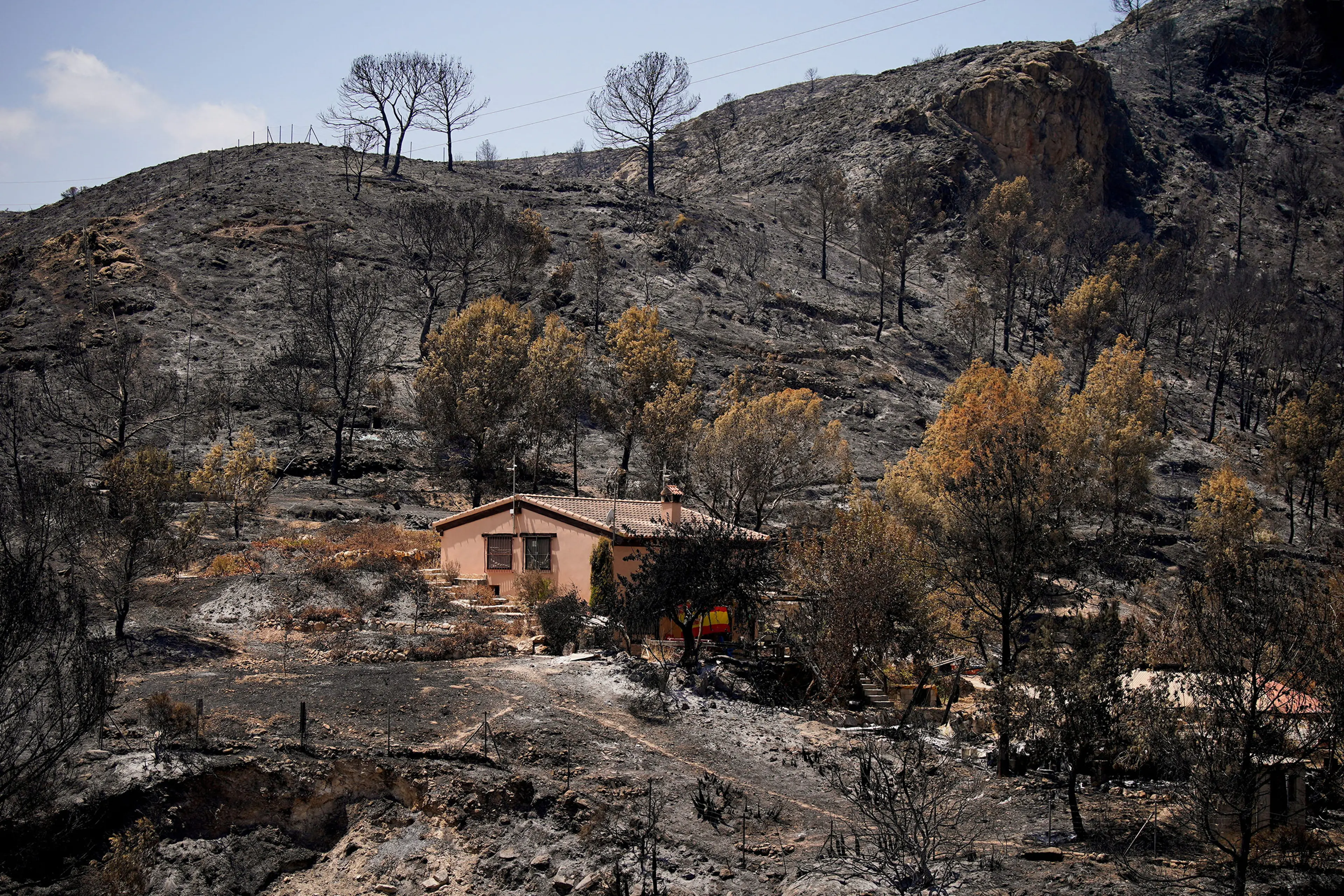
In Spain, fires near Madrid and Ávila forced tens of thousands to flee. Authorities declared a national wildfire emergency after major blazes merged and burned large areas west of the capital. Officials put the Spanish total near 100,000 evacuated, with thousands more ordered to shelter in place. One earlier fire in Andalusia killed at least 12 people.
Prime Minister Pedro Sánchez visited affected zones and called for international help. EU partners sent aircraft and crews from Greece, Italy, Portugal and Turkey. Spain has already recorded more than 150,000 hectares burned this year, several times higher than the same period in 2025.
Heatwave Adds Pressure
These fires arrived after successive heatwaves and drought that left forests bone-dry. Scientists link the intensity to hotter, longer summers. Pyrocumulonimbus clouds — fire-generated thunderclouds rarely seen in southwest Europe — have made some blazes nearly impossible to fight directly. Embers and dry lightning spread flames further.
A fresh heat dome is forecast to build this week. Temperatures in western and southern Europe could climb above 40°C again. Forecasters say the heat will expand across large parts of the continent into early August. That raises the chance of new ignitions and slower containment of existing fires.
Most fires still start from human causes — negligence, machinery or deliberate acts. French authorities have made more than 160 arrests. Spanish police have detained several suspects as well.
Human Cost and Response
Evacuations emptied holiday resorts at the height of summer. Care homes moved vulnerable residents. Roads closed. Trains cancelled. The Tour de France finale was shortened so security forces could shift to fire duties. Wine growers near Bordeaux fear smoke damage to the harvest even if vines escape the flames.
European Union civil protection mechanisms continue to coordinate aircraft and ground teams. France and Spain have appealed for more help. Local leaders stress that firefighters face conditions beyond normal operational limits and must prioritise saving lives over holding every line of forest.
The fires underscore a pattern seen across southern Europe in recent summers: extreme heat dries vegetation, winds drive rapid spread, and emergency services stretch thin. As the next heatwave arrives, authorities remain on high alert. Residents in fire-prone zones are being told to prepare for possible further orders to leave.