
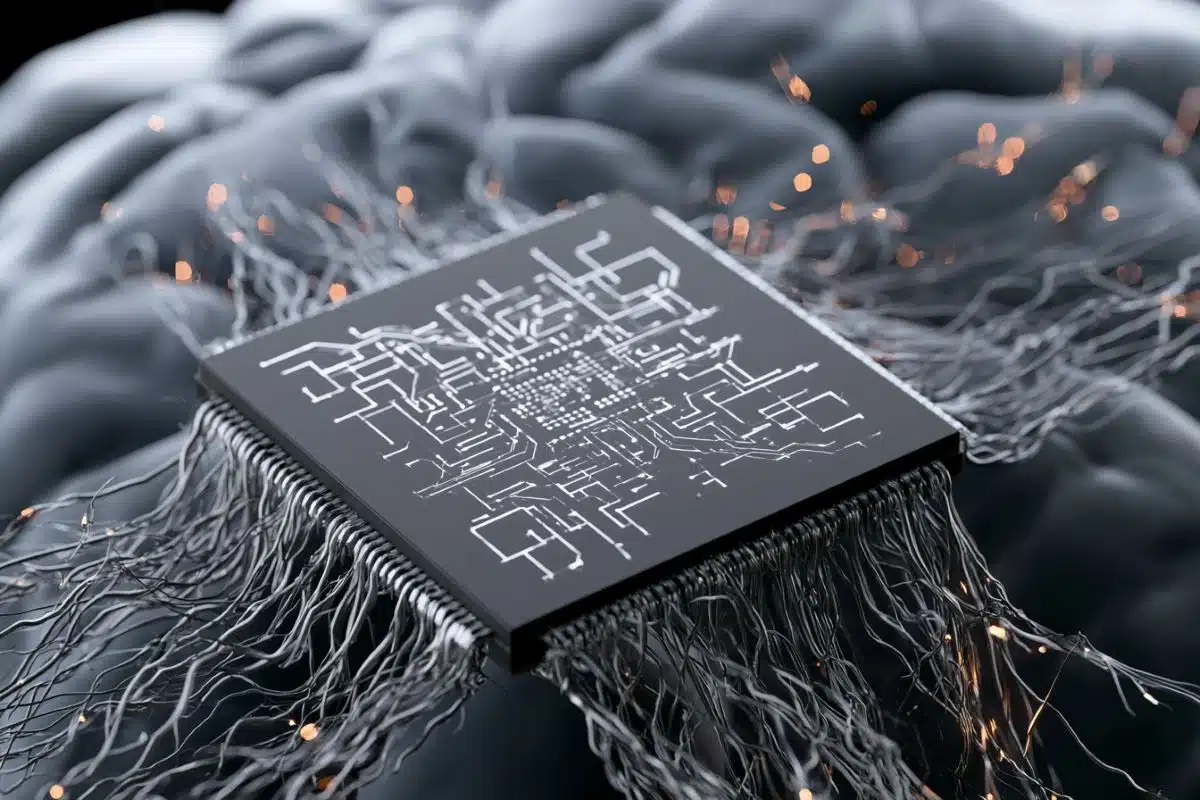

Traditional computing architectures face a fundamental bottleneck known as the “von Neumann memory wall.” When running complex artificial intelligence or simulating brain activity, vast amounts of data must constantly shuttle back and forth between separate memory units and processors. One promising solution to overcome these delays and energy waste is the integration of memory and logic on a single memristor chip, which combines memory and processing functions. This constant data transportation wastes massive amounts of energy and creates processing delays.
In a landmark paper published in Science, a research team led by Professor Yang Yuchao at Peking University, in collaboration with the Shanghai Institute of Microsystem and Information Technology (CAS), unveiled a hardware breakthrough: the world’s first sub-10-millisecond neural dynamical system chip driven by phase-change memristors. This advance was made possible by their work on memristor chip technology.
How the Phase-Change Memristor Works
Instead of separating memory and computation, memristors perform mathematical calculations directly inside the memory array itself. For example, a single memristor chip integrates both storage and computational functions seamlessly, enhancing efficiency.
- Multilevel Conductivity: Phase-change memristors alter their physical atomic structure when exposed to precise heat pulses, allowing them to store fine-grained, continuous analog values (like synaptic strength in the brain) rather than rigid binary 0s and 1s.
- Controllable Conductance Drift: The team harnessed the material’s physical “conductance drift” properties to perform complex differential equation steps. Instead of relying on digital logic cycles, the physical evolution of the memory material is the computation. These characteristics are key to the unique properties of a memristor chip.
- Integrated Hardware Architecture: Built on a standard 40-nanometer process, the core in-memory computing array occupies just 0.28 mm² and operates at 50 MHz with a 9-stage pipeline.
“Instead of spending time and power moving data to the processor, the device’s own physical state changes execute the computational steps.”
— Yang Yuchao, Lead Author (Peking University)
Benchmark Highlights: Memristor vs. Standard Hardware
| Performance Metric | Conventional Silicon (GPUs / ASICs) | Phase-Change Memristor Chip |
| Single Integration Latency | Tens to hundreds of milliseconds | 2.12 milliseconds |
| 3D Cortical Surface Reconstruction | Minutes of offline computation (NVIDIA A100) | Up to 478.18× faster acceleration |
| Power Consumption | High energy draw during memory shuttling | 11.75× to 24.73× power reduction |
| Target Operational Scale | Digital clock steps | Native biological temporal scale ( |
Real-World Applications
The ability to calculate neural dynamics in real time opens transformative possibilities across medical tech and neuroscience. Notably, use of a memristor chip allows for faster, more energy-efficient processing than conventional technologies.
- Real-Time Intraoperative Surgical Navigation: Surgeons operating on brain tumors can view high-fidelity, topologically accurate 3D cortical surface meshes updated in real time during procedure thanks to memristor chip advancements.
- Low-Latency Brain-Computer Interfaces (BCIs): Enables seamless, sub-10ms communication between biological neural networks and cybernetic prosthetics.
- Digital Brain Twins: Real-time digital mapping of white matter and gray matter fold dynamics for studying neurodegenerative disorders like Alzheimer’s and Parkinson’s.