


Curiosity captures a sea of polygons that leaves scientists stunned.
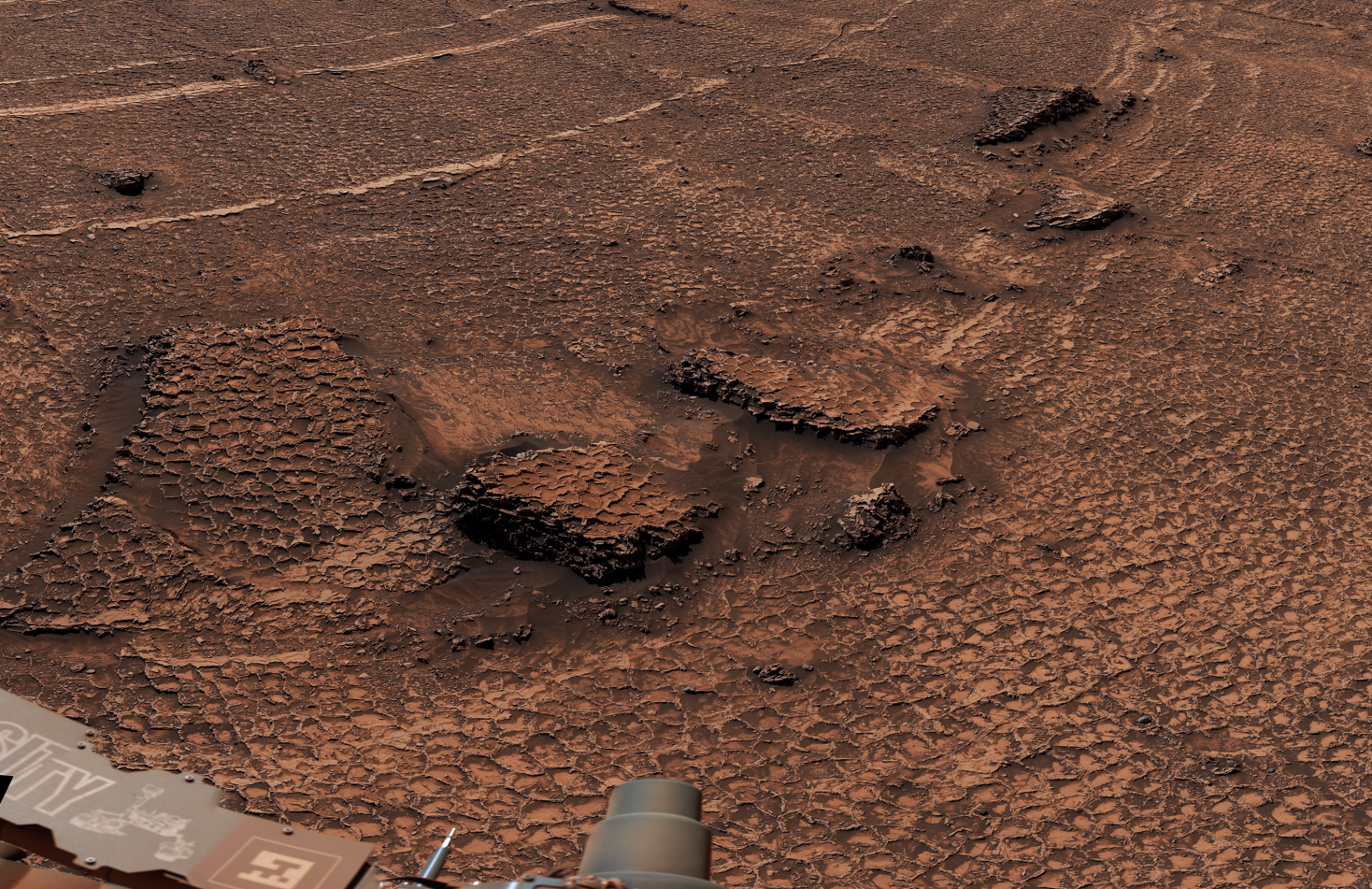
NASA’s Curiosity rover has revealed a sweeping field of honeycomb-like polygons across a Martian valley, the largest stretch of these geometric features the mission has ever seen. The discovery came as the rover climbed into an area nicknamed Valle Grande on the lower slopes of Mount Sharp.
In a 360-degree panorama captured on June 19 and 20, 2026—sols 4930 and 4931—the polygonal fractures stretch in every direction as far as the cameras can see. Each shape measures roughly 1.5 to 3 inches (4 to 8 centimeters) across. The patterns even wrap around the sides of a nearby sand-capped butte called Miraflores, which stands about 20 feet (6 meters) tall.
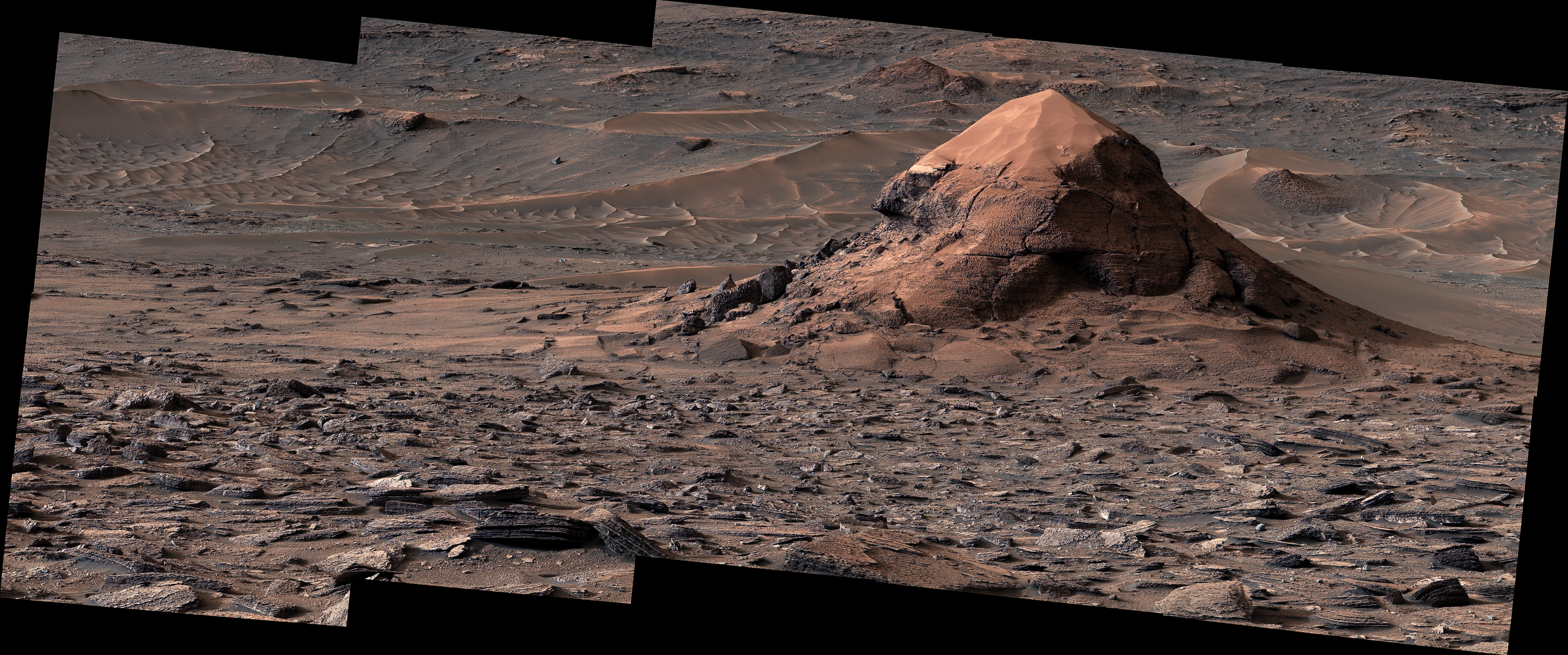
Credit: NASA/JPL-Caltech/MSSS
“We’ve seen a lot of fascinating landscapes through Curiosity’s eyes, but this sea of polygons took our breath away. We measured their shapes and chemistry carefully and are hopeful there are clues in the data as to how these features formed.”
– said Ashwin Vasavada, the mission’s project scientist at NASA’s Jet Propulsion Laboratory.
Why the Patterns Matter
Curiosity has spotted smaller patches of these polygonal fractures before. Some clearly formed as mud cracks in ancient wet sediments. Others may result from repeated freeze-thaw cycles or from compression that squeezed water from the ground when the surface was buried long ago. The sheer scale in Valle Grande is new. Scientists have never recorded so many of the features in one place on Mars.
The rover has been exploring Gale Crater since its landing in August 2012 and has climbed Mount Sharp since 2014. Along the way it has found clear evidence that lakes and streams once existed here. The new polygon field adds another layer to that watery history. Understanding how these shapes formed could refine the timeline of when liquid water last shaped the surface and under what climate conditions.
Credit: NASA/JPL-Caltech/MSSS
Curiosity continues to collect chemistry and shape data from the site. The findings will help researchers test competing ideas about the processes that left these geometric scars. Fourteen years into its mission, the rover is still turning up surprises that rewrite parts of Mars’ environmental story.