


Clever power swap keeps three instruments alive in interstellar space
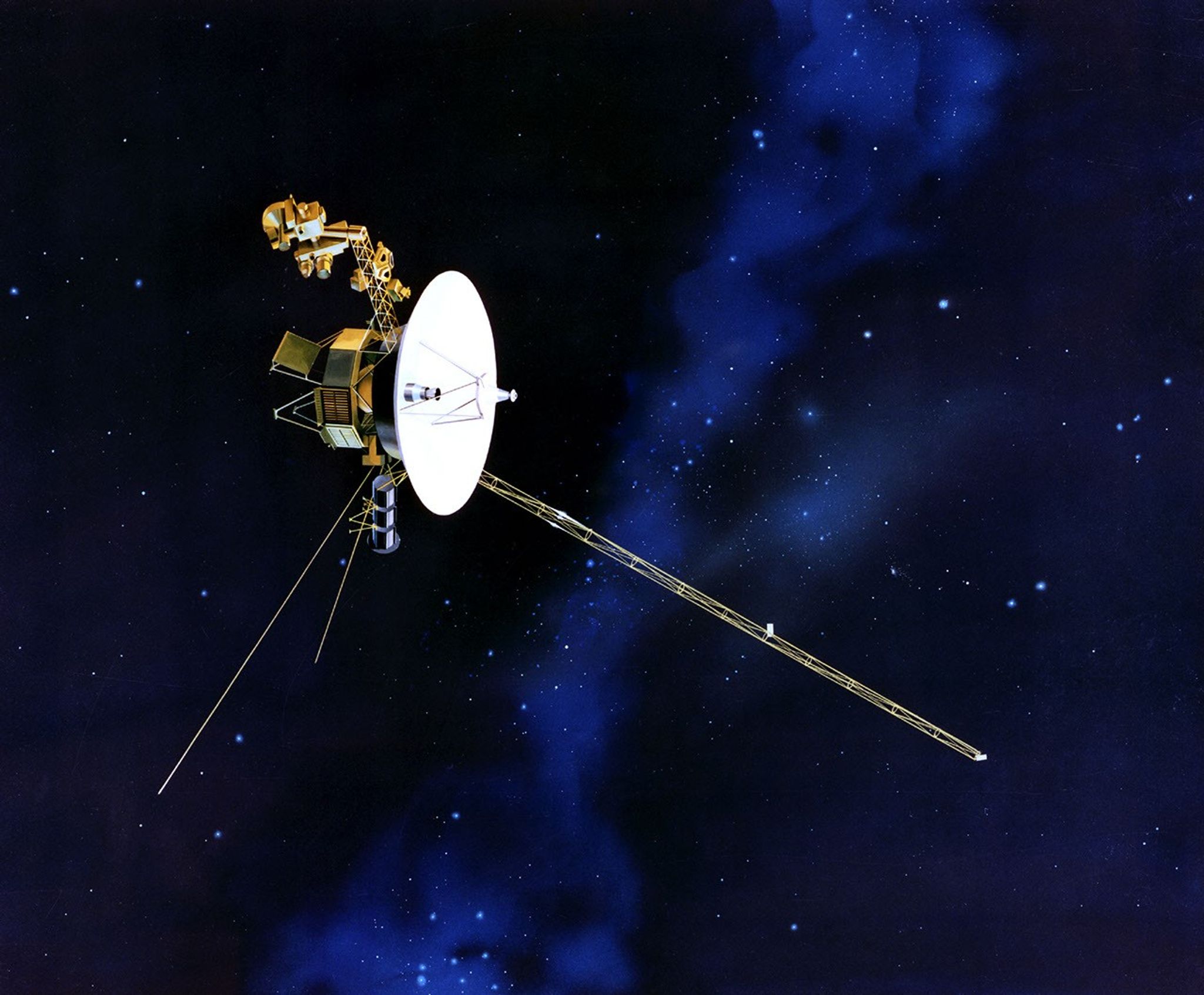
Nearly 50 years after launch, Voyager 2 still talks to Earth from more than 13 billion miles away. Its power supply is fading, yet engineers just found a way to stretch its science mission longer than expected.
On August 4, 2026, NASA’s Jet Propulsion Laboratory announced success with a carefully planned operation nicknamed the “Big Bang.” The team simultaneously switched off higher-power devices and activated lower-power substitutes. The goal was simple: free up electricity while keeping critical systems warm enough to function in the deep cold of interstellar space.
Why Power Is the Enemy
Voyager 2 and its twin draw electricity from radioisotope thermoelectric generators. These convert heat from decaying plutonium into power. Each year the probes lose about four watts as the plutonium depletes. After almost half a century, the margins have become razor-thin.
Since 2024 the mission has already turned off two science instruments on each spacecraft. Without the recent change, Voyager 2 would have needed to shut down another instrument before the end of 2026. The three that remain—the Cosmic Ray Subsystem, the magnetometer, and the Plasma Wave Subsystem—would have faced an earlier end.
How the Swap Worked
Engineers turned off two heaters and a digital tape recorder that had been left on mainly for its residual heat. In their place they activated two different, lower-power heaters and a propulsion-related device that also produces useful heat. The simultaneous switch prevented dangerous temperature drops that could freeze propellant lines and silence the spacecraft.
Commands take roughly 20 hours to reach Voyager 2. Confirmation takes another 20 hours. The team tested the approach carefully in May and June before executing the full procedure in July. Temperatures settled in a safe range, and the power savings held.
Why the Extra Time Matters
Voyager 2 is one of only two spacecraft ever to enter interstellar space, crossing the boundary in 2018. Its remaining instruments still return unique data on the interstellar medium—the thin plasma, magnetic fields, and cosmic rays that fill the space between stars. No other mission can collect these measurements in situ.
The savings should keep the three instruments running together for at least one additional year. Some analysis suggests the power margin could stretch closer to two years before the next hard decision. The team plans to attempt the same swap on Voyager 1 in the coming months.
Voyager 2 launched in 1977 on a mission expected to last a few years. It has already delivered humanity’s only close-up views of Uranus and Neptune. Every extra month of data from the edge of the solar system remains irreplaceable. The “Big Bang” did not solve the power problem forever, but it bought valuable time for the oldest active interstellar explorers we have.
AI Disclosure: This article was created with the assistance of artificial intelligence tools and was reviewed and edited by the Glowls News editorial team before publication.