
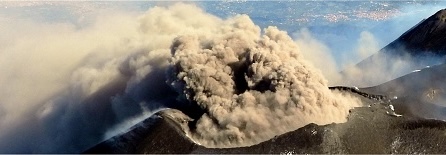

Europe’s most active volcano keeps Catania Airport shut through Ferragosto, stranding holiday travelers in the worst disruption in two decades.
Mount Etna has once again reminded Sicily who runs the show. Sustained ash emissions from the volcano have forced Catania’s busy airport to remain closed into Saturday afternoon, hitting the height of Italy’s summer holiday week.
Activity intensified around August 6. Winds carried fine volcanic ash south across the island’s main gateway, about 30 kilometers from the summit. Airport operator SAC suspended arrivals and departures repeatedly. The latest extension kept the airport closed through roughly 2–3 p.m. local time on August 15, the Ferragosto holiday.
Why the Ash Stops Planes
Volcanic ash is not ordinary dust. The glassy particles can melt inside jet engines, coat critical parts, and cause them to fail. Boris Behncke of the National Institute of Geophysics and Volcanology’s Etna Observatory put it plainly: ash can be sucked into engines and force them to stall. That is why aviation authorities treat even moderate plumes with extreme caution.
This episode stands out. Etna erupts often, yet experts noted the unusual persistence of continuous ash from the summit craters, particularly Voragine. Deeper, gas-rich magma appears to be driving more efficient fragmentation, producing higher volumes of fine ash than typical recent outbursts. Aviation color codes stayed elevated for days. Lava also flowed from lower vents into the Valle del Bove, but the ash—not the lava—created the air-travel crisis.
Drone footage from August 13 evening showed volcanic activity on Italy's Mount Etna.
— The Hindu (@the_hindu) August 14, 2026
Mount Etna, Europe's highest and most active volcano, frequently disrupts operations at Catania airport, whose operator launched the sale of a stake of at least 51% in May.
🎥Reuters pic.twitter.com/V0vXTmiulL
Numbers Tell the Story
Between August 6 and 12, nearly 2,000 flights were scheduled at Catania. About 36 percent were canceled. Roughly 600 to 630 more were diverted to Palermo, Trapani, Comiso, and Lamezia Terme on the mainland. The airport normally moves at least 40,000 passengers a day in peak season. Tens of thousands of travelers saw plans unravel. Preliminary estimates put tourism-sector losses between €12 million and €24 million.
It is the longest single emergency for the airport since 2002. Shorter interruptions are common. Sustained multi-day ash fallout is rarer and more disruptive.
Living With an Active Neighbor
Catania sits in Etna’s shadow by design and history. The volcano is Europe’s tallest and most continuously active. Its frequent mild-to-moderate eruptions feed fertile soils and draw tourists, yet they also force recurring operational limits on the island’s main airport. The current event has revived quiet questions about long-term planning for a hub so close to a restless giant.
For now, the science is clear. Monitoring networks track tremor, gas, and deformation in real time. Forecasts of exact ash duration remain difficult. Passengers are advised to check airline updates before heading to any Sicilian airport. Alternative airports absorbed significant traffic, but pressure on ground transport and local services rose sharply.
Etna will keep erupting. The ash cloud of August 2026 simply showed, once more, how a single sustained plume can ground a holiday season.
Watch Mount Etna live here: LIVE
AI Disclosure: This article was created with the assistance of artificial intelligence tools and was reviewed and edited by the Glowls News editorial team before publication.