
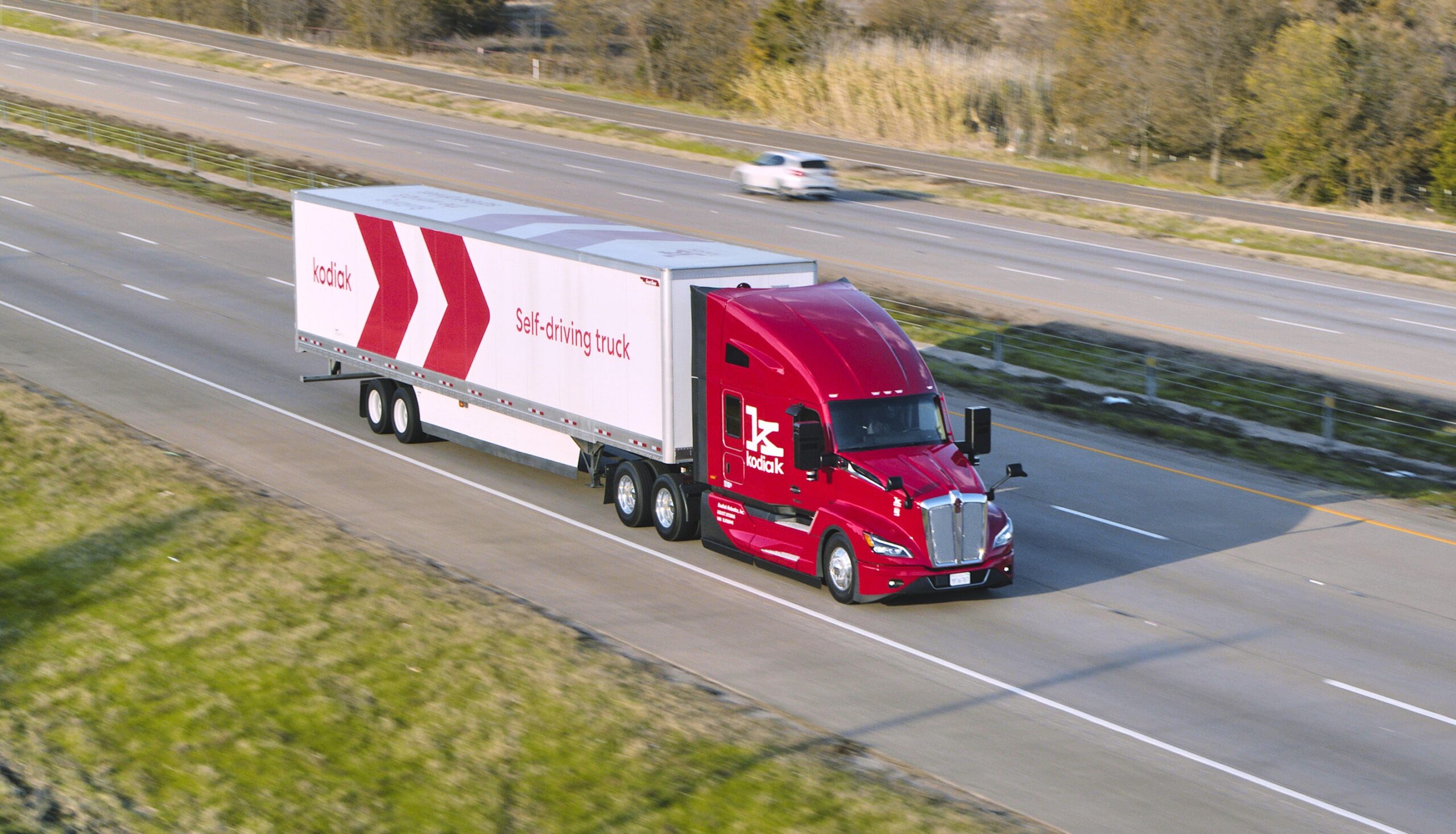

Kodiak and Aurora win first permits as state lifts long-standing ban on heavy autonomous freight vehicles.
Self-driving semis are no longer confined to Texas test routes. California has cleared its highways for commercial autonomous truck testing, handing the first permits to home-state companies that spent years working around a local ban.
On April 28, 2026, the California Department of Motor Vehicles adopted new rules that removed the prohibition on autonomous vehicles weighing more than 10,001 pounds. The change created a formal pathway for testing and eventual deployment of heavy-duty freight trucks.
First Permits Issued
In mid-August, Kodiak AI and Aurora Innovation received drivered testing permits. Kodiak, based in Mountain View, has already put a handful of trucks on the road near its headquarters. Both firms met the DMV’s requirements for safety, insurance, registration, and safety-driver qualifications.
The permits still require a human safety operator behind the wheel. Companies cannot operate on roads with speed limits of 25 mph or less except on the shortest direct routes between destinations. Heavy-duty vehicles must continue stopping at California Highway Patrol weigh stations and follow all existing commercial motor vehicle rules.
Strict Testing Hurdles Ahead
California set a high bar. Manufacturers must complete 500,000 miles of testing with a safety driver, then another 500,000 miles in driverless mode before applying for commercial deployment. A structured safety case covering hardware, software, and operations is required at each stage. The total approaches one million miles, including significant portions inside California.
The rules also add new oversight tools. Law enforcement can cite AV companies for moving violations. Manufacturers must respond to first-responder calls within 30 seconds and maintain two-way communication. Local officials can issue electronic geofencing orders to clear AVs from active emergency zones.
A watershed moment: @KodiakRobotics received its autonomous vehicle testing permit yesterday from the @CA_DMV.
— Don Burnette (@don_burnette) August 14, 2026
This development enables us to test our autonomous driving solution while carrying goods for customers in our home state of California, the cradle of innovation.… pic.twitter.com/YPDzsba6Et
Industry Impact and Pushback
For California-based developers, the shift ends a long detour. Both Aurora and Kodiak had focused commercial operations in Texas, where driverless trucks already haul freight on public roads. The new framework lets them test and scale in their home market, potentially linking West Coast ports and logistics corridors to national autonomous networks.
Labor groups remain opposed. Teamsters California sued the DMV in early August, arguing the agency used a streamlined rulemaking process that understated economic impacts and failed to fully assess safety risks or job losses. The union estimates hundreds of thousands of trucking jobs could eventually be affected.
California’s approach balances innovation with caution. The phased mileage requirements and expanded enforcement tools aim to prove safety before full commercial rollout. How quickly companies accumulate those miles—and how courts handle the legal challenges—will determine when driverless freight trucks become a regular sight on the state’s busiest highways.
AI Disclosure: This article was created with the assistance of artificial intelligence tools and was reviewed and edited by the Glowls News editorial team before publication.